
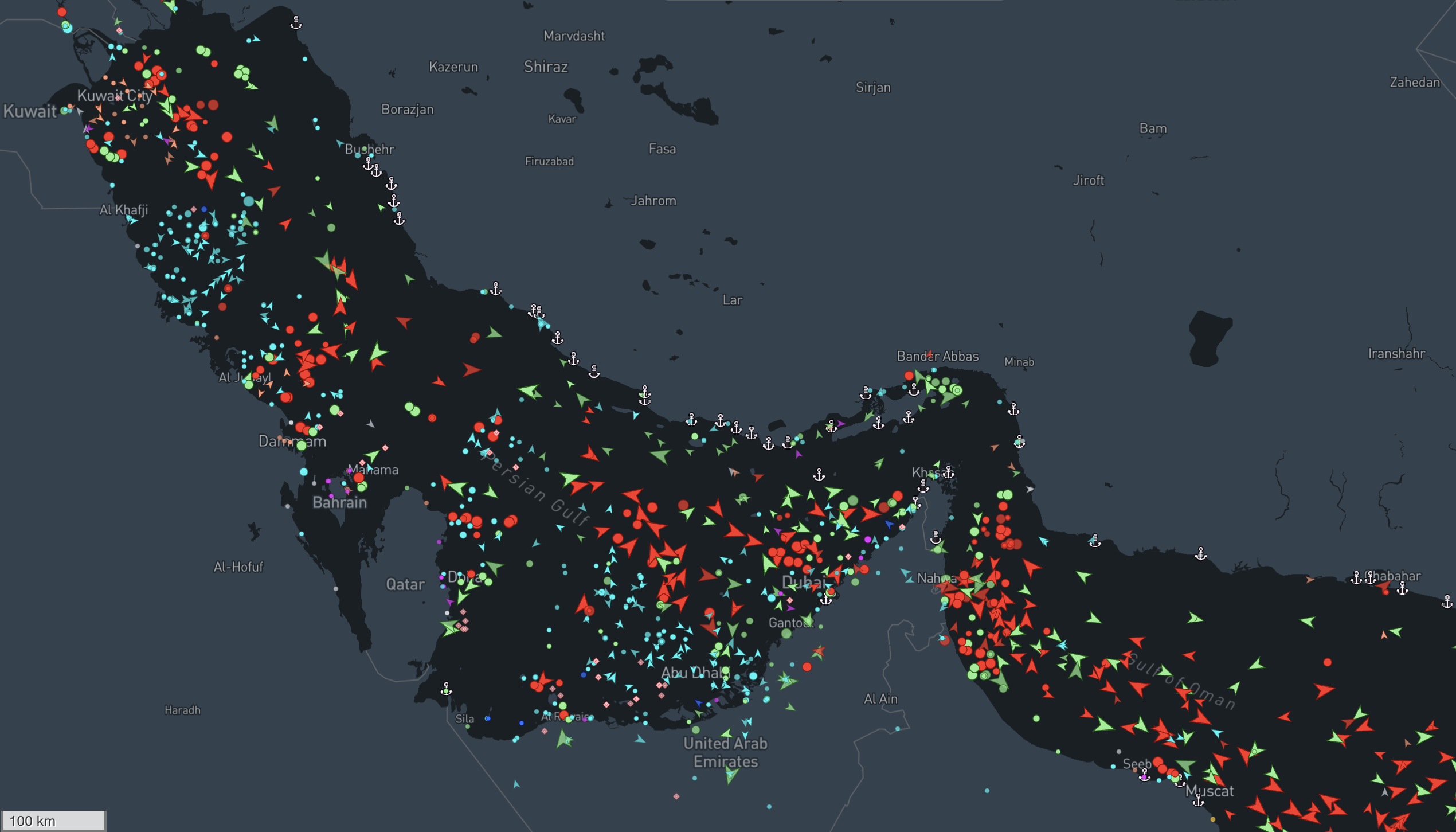
A historical incident snapshot and decision record for organisations operating in Dubai and across the United Arab Emirates
Historical briefing published 4 March 2026: This article records the verified incident picture and operational considerations available at the time of publication. It is not a live security advisory. Circumstances, official directions and travel conditions may have changed. For current decisions, consult relevant UAE authorities, applicable travel advice and NSI Global’s latest analysis
Editorial note: The article was revised on 10 September 2026 to clarify its historical status, distinguish Reuters publication times from incident times, correct source limitations and remove unsupported claims. Its information cut-off remains 4 March 2026 at 04:11 Gulf Standard Time.
By Navid Sobbi, Founder and CEO of NSI Global
Executive Summary
At the information cut-off, organisations in Dubai and across the United Arab Emirates were managing a fast-moving regional security environment involving missiles and drones, air-defence activity, disruption risk and a high volume of unverified online content. Reuters reporting available by that time described incidents affecting diplomatic and military sites in Dubai, Riyadh and Cyprus, as well as fuel infrastructure at the Port of Duqm in Oman.
The reports did not establish that every site was an intended target, nor did they support a general claim that all UAE businesses faced the same level of threat. They did, however, demonstrate why organisations needed to assess exposure at the level of people, premises, journeys, suppliers and critical services rather than rely on a single country-wide risk label.
The appropriate objective at publication was continuity without alarm. Leadership teams needed verified information, clearly assigned decision authority and proportionate actions tied to defined triggers. National emergency instructions and directions from relevant UAE authorities took precedence over corporate assessments.
Scope and Time Basis
This briefing reflects information available at 4 March 2026 at 04:11 GST, equivalent to 4 March 2026 at 00:11 UTC. It should be read as a historical record of that moment, not as a description of current conditions.
The incident times below are Reuters publication times converted to UAE Gulf Standard Time unless the cited report specified the time of impact. Publication time shows when information became available to readers. It should not be interpreted as the time an incident occurred.
The source labels also distinguish between official statements reported by Reuters and information attributed to unnamed sources. This is more precise than applying an undefined confidence scale across materially different source types.
Incident Snapshot as at 4 March 2026
The following events were among the most recent relevant reports available at the cut-off.
| Reuters publication time in GST | Location | Reported incident and effect | Source basis |
| 3 March 2026 at 04:23 | Riyadh, Saudi Arabia | Two drones reportedly struck the United States embassy complex. A limited fire and material damage were reported, with no injuries reported. | Reuters reporting citing the Saudi defence ministry and people familiar with the matter |
| 3 March 2026 at 04:48 | Al Minhad Air Base, UAE | Australia said its defence personnel were safe and no Australians were injured following a weekend drone attack near the base. The report did not establish the complete casualty or damage position for others. | Reuters reporting citing Australian officials |
| 3 March 2026 at 12:13 | Port of Duqm, Oman | Several unmanned aircraft reportedly struck a fuel tank at the commercial port. Oman said the damage was contained and there were no casualties. | Reuters reporting citing Oman’s state news agency |
| 3 March 2026 at 15:23 | RAF Akrotiri, Cyprus | An Iranian-made drone reportedly struck the runway at the British military base. The report described limited damage and said the strike occurred on 2 March. | Reuters reporting citing the British defence ministry |
| 3 March 2026 at 23:53 | Dubai, UAE | A drone strike reportedly caused a limited fire near the United States consulate. The fire was extinguished and no injuries were reported. | Reuters reporting citing the Dubai Media Office |
| 4 March 2026 at 03:28 | Riyadh, Saudi Arabia | A source familiar with the matter said a suspected Iranian drone struck a CIA facility within the embassy complex. The report said there was no indication that the facility was the intended target. | Reuters reporting based on an unnamed source; attribution and intent were not independently established in the report |
Source limitation: The original article included UAE interception totals linked to a Reuters statistics page dated 3 March. That URL now resolves to a 10 March update containing later cumulative figures. Because the current link does not substantiate the earlier totals in their original time context, those figures have been omitted from this revised historical briefing.
What the Situation Meant for UAE Businesses at Publication
The incidents supported three practical conclusions for organisations operating in the UAE.
Direct Risk Had to Be Assessed by Exposure
A reported incident near a diplomatic, military, aviation or infrastructure site did not translate automatically into the same risk for every business. The relevant factors included distance from the event, site access, workforce location, travel routes, building arrangements and reliance on nearby infrastructure.
Interception activity could also create secondary hazards, including debris and temporary movement restrictions. Organisations therefore needed a process for receiving official instructions, accounting for personnel and deciding whether a particular site or journey crossed a predefined risk threshold.
Disruption Could Extend Beyond the Incident Location
The Port of Duqm report illustrated that an incident affecting fuel or transport infrastructure could have commercial effects beyond the damaged asset. At publication, businesses needed to consider whether aviation changes, port restrictions, transport delays, supplier interruption or employee movement constraints could affect essential operations.
This did not justify assuming that every supply chain would be disrupted. It justified identifying critical dependencies, confirming alternatives and setting a review point for decisions that could not safely wait for a weekly management cycle.
Information Quality Was an Operational Control
In a rapidly developing event, an old video, false location, synthetic recording or unverified claim could prompt an unnecessary closure or unsafe movement. Corporate teams needed to distinguish among official information, credible media reporting and internal analytical judgement.
Employees responsible for crisis communications were advised to use approved sources and internal channels and to avoid redistributing unverified incident claims. Any legal question about publication, recording or online content in the UAE required advice specific to the facts; a general business briefing could not define the legal position.
Operational Measures Appropriate at the Time
The following measures were proportionate planning controls at the 4 March cut-off. They are retained to explain the management response the incident picture supported at that time.
Crisis Governance and Decision Authority
Organisations with material UAE exposure were advised to nominate a crisis lead and deputy, establish a short reporting cadence and maintain one incident log. Each entry needed a source, timestamp, status and statement of relevance to the organisation.
Decision triggers were more useful than a stream of alerts. Examples included an official warning affecting a workplace, a confirmed incident within a defined proximity to a site or route, a material change to aviation access, or disruption to a critical supplier. Each trigger needed an authorised decision-maker and a pre-agreed action.
NSI Global’s Business Continuity capability supports organisations in connecting threats and dependencies to recovery priorities, decision authority and tested procedures.
Workforce Safety and Travel
Employers were advised to account for personnel in potentially affected areas, confirm how local alerts would reach them and review journeys individually. The business need, traveller profile, route, accommodation, return options and official advice applicable to the traveller all formed part of that assessment.
Relocation or evacuation was not an automatic response to uncertainty. It required current official direction, viable transport and an assessment of whether movement would reduce rather than increase exposure. NSI Global’s Travel Intelligence service can support journey-specific assessments where a general country rating is insufficient.
Critical Suppliers and Infrastructure
At the time, continuity teams were advised to identify services and deliveries whose interruption would stop a safety-critical or revenue-critical activity. Useful checks included confirmed stock levels, actual transport routes, alternate suppliers, emergency purchasing authority and the recovery arrangements of key telecommunications or technology providers.
Multi-region technology design can reduce some dependencies, but it should not be described as proof against disruption. Failover arrangements need configuration, access, data and testing appropriate to the organisation’s systems.
Cyber Incident Readiness
The regional crisis created credible themes for phishing, impersonation and fraudulent requests even without proof that every organisation faced increased state-linked targeting. Finance, executive support and travel teams therefore needed heightened verification for urgent payments, itinerary changes, unfamiliar collaboration links and messages purporting to contain government or security updates.
Where compromise was suspected, containment needed to be coordinated with evidence preservation. NSI Global’s Digital Forensic Incident Response team can help establish what occurred, preserve relevant material and support legal, insurance or regulatory decisions. Outcomes depend on the systems, access and evidence available in each engagement.
Sensitive Meetings and Communications
Organisations handling defence, government, legal, transactional or other highly sensitive information could assess whether the existing environment matched the confidentiality requirement. Appropriate controls could include access restriction, approved communications channels, managed devices and a review of physical and technical exposure.
A Technical Surveillance Counter Measures survey may be appropriate where there is a defined covert-surveillance concern or a high-consequence meeting environment. Its scope should be based on the risk profile, locations, systems and surveillance channels of concern. A survey can identify devices or anomalies within the agreed scope and conditions; it does not guarantee that every possible surveillance method has been excluded.
For sensitive leadership communications, Communications Security measures can address approved devices, access, configuration and communications architecture. Encryption is one control and does not compensate for a compromised endpoint or unsafe operating practice.
A Defensible Information Process
At publication, a concise incident record was more useful than an unrestricted feed of reports. A practical classification model was:
- Officially stated: issued by the authority responsible for the event or direction.
- Credibly reported: published by a reliable news organisation but not confirmed directly by the relevant authority in the material reviewed.
- Assessed: NSI Global’s or the organisation’s judgement about what verified facts could mean for its operations.
- Unverified: information that lacked sufficient sourcing and should not drive a high-consequence decision without further corroboration.
These labels describe the source basis; they are not mathematical probabilities. If NSI Global uses a formal intelligence confidence scale in a client engagement, the methodology, information gaps and assumptions should be stated.
How NSI Global Supports UAE Organisations
NSI Global supports organisations that need to convert regional reporting into decisions about people, sites, travel, suppliers and sensitive operations. Relevant services include:
- Geopolitical Intelligence reporting and organisation-specific risk assessment
- Travel Intelligence for individual journeys, routes and workforce movements
- Business Continuity planning, decision thresholds and resilience testing
- Digital Forensic Incident Response for suspected cyber compromise and evidence-led investigation
- Technical Surveillance Counter Measures and Communications Security for appropriately scoped sensitive-environment risks
Engagement scope should follow the client’s actual risk profile. A narrowly commissioned service cannot address exposures outside the locations, systems, time periods and threat channels it covers.
For a confidential discussion concerning current UAE operating risk, contact NSI Global in Dubai on +971 (0)4 409 6824.
Frequently Asked Questions
Is This a Current UAE Security Advisory
No. It is a historical briefing with an information cut-off of 4 March 2026 at 04:11 GST. Current decisions should be based on relevant UAE authority directions, current travel and transport information and an organisation-specific assessment.
Do the Times in the Incident Table Show When Each Event Occurred
Not necessarily. They are Reuters publication times converted to GST unless the report gave an incident time. They show when the cited information became publicly available, not when the event necessarily happened.
Why Were the Original UAE Interception Totals Removed
The original Reuters link now resolves to a later 10 March update with cumulative figures. Without an accessible source that preserves the earlier totals and their exact cut-off, repeating them would create false precision in this historical record.
What Should an Organisation Use for Current UAE Decisions
Use the relevant UAE authorities and regulators, official airport, airline, port or transport notices, travel advice applicable to affected personnel and verified organisation-specific intelligence. News reporting can add context but does not replace an official direction.
Sources and Further Reading
- Reuters reporting on the United States embassy complex in Riyadh
- Reuters reporting on the Port of Duqm fuel-tank strike
- Reuters reporting on RAF Akrotiri
- Reuters reporting concerning Australian personnel at Al Minhad Air Base
- Reuters reporting on the fire near the United States consulate in Dubai
- Reuters reporting on the suspected strike within the Riyadh embassy complex
- Reuters cumulative Gulf strike statistics updated 10 March 2026
General information only: This historical analysis does not replace UAE Government directions, legal advice, official travel advice or an organisation-specific security assessment.